Foreman
NewAsk an AI to watch security footage for hazards and it finds them everywhere, because that is what you asked about.
Ask an AI to watch security footage for hazards and it finds them everywhere, because that is what you asked about.
Six pieces — the ones I would defend in review.

A lot of company software has no way in except the screen. To get data out, something has to click through it the way a person would.

lmost everything I make has the same shape. Something produces an answer — a model, a spreadsheet, a payment provider — and I build the part that works out whether to trust it.
I learned that on unglamorous data. For a year at Accenture I worked on commercial insurance records that arrived from brokers in whatever shape they felt like sending, and once found a $4 million property that had been entered as $40 million. Nobody had noticed. You cannot read a hundred thousand rows by hand, so you write the checks that find the row worth reading.
Everything since has been that same move pointed somewhere new: video, browsers, payments, city records. I graduated from NYU in May 2026 with a master's in Management of Technology, and before that took a computer science degree I still use daily.
Building things that ship
Years
Live, taking real payments
Countries
Hand-labelled to test my own work
Clips
Written, reviewed, in production
Lines
A $4 million building had been keyed into an insurance record as $40 million. It had been sitting there for a while. Nobody had noticed, because nobody reads a hundred thousand rows — they read the summary, and the summary was wrong in a way that looked completely normal.
What fixed it was not attention. It was a set of cross-field checks that could say: this number disagrees with that number, go and look. I spent a year building those, and watching people trust the output more once they could see what it had caught.
Models are wrong in exactly the same way. Confidently, plausibly, in the shape you were expecting. So I build the same thing for them — the eval, the second pass, the number you can go and check yourself. That is the whole job, and it is why every project here ships with what it cost as well as what it did.
— Y.N., New York
Team of four; I led the analysis, not the model. Found that stockouts and healthy stock had near-identical inventory buffers, which broke the obvious threshold rule everyone starts with.
57 engineered features predicting which drivers take a coupon, turned into a recommendation about which amenities a highway should actually build.
Twenty thousand app reviews sorted into themes, then mapped onto what a product team should fix first.
Recency, frequency and spend, in SQL, visualised in Tableau. The plainest possible version of turning a table into a decision.
A demo tells you something can work once. A measurement tells you how often it works, and what it costs when it does. I would rather hand you the second one, even when the number is worse than the story.
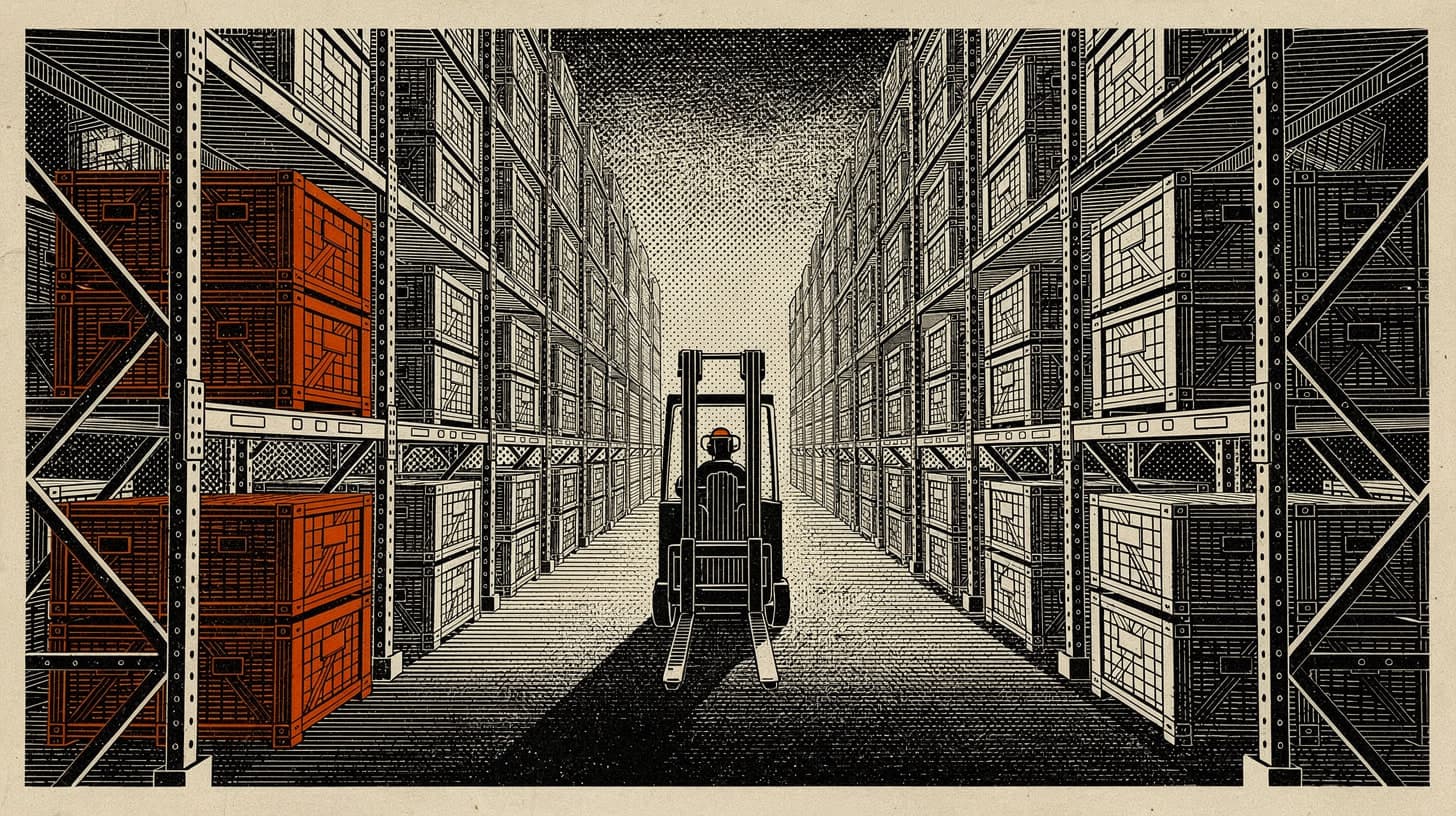
All workAsk a model to watch footage for accidents and it will find accidents, because finding them is what you asked about. Mine once reported a pedestrian walking in front of a moving forklift, at 95% confidence. A second model agreed and marked it high severity.
The frame was a black title card. Printed on it, in white letters, were the words PASSING IN FRONT OF A FORKLIFT. It had read the words and filed them as something it had seen.
Printed text is everywhere in real footage — slates, timestamps, captions burned into the picture. One extra check in the same call removed that whole category of mistake at no added cost. Finding things like this is most of the job, and it is why I build the measurement before I trust the demo.
What I'm into, off the clock: the things I would talk about for an hour if you let me. One of them got out of hand and is still running.